
What if the most powerful tool for healing inequities in schools isn’t a new curriculum or policy—but a five-second pause?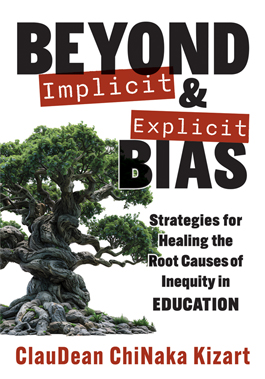
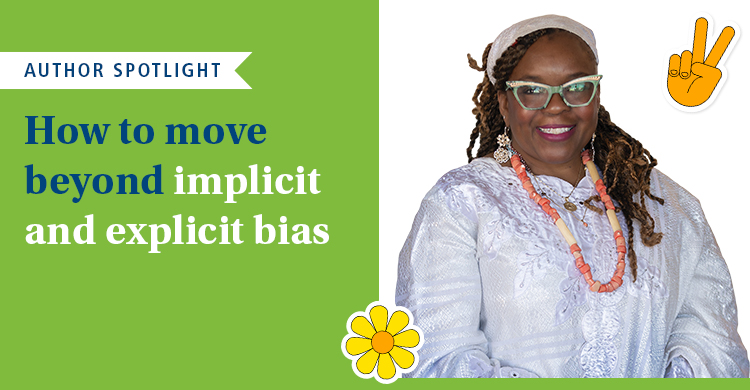
Every day, educators make hundreds of decisions that shape student experiences, opportunities, and outcomes. Many of those decisions happen automatically, guided by cognitive shortcuts we rarely stop to question. In Beyond Implicit and Explicit Bias: Strategies for Healing the Root Causes of Inequity in Education, Dr. ClauDean ChiNaka Kizart challenges educators to slow down, look inward, and address the unseen forces influencing their classrooms and school communities.
Check out our Q&A with Dr. Kizart
In the conversation below, Dr. Kizart shares the “now what” behind bias work—practical steps educators can take immediately, how schools can begin healing inequity at a systemic level, and why grace is essential to this transformative work.
Q: The book includes practical assessments and tools. What is the most immediate, actionable strategy or tool from your book that an individual teacher can implement in their classroom this week to begin counteracting bias?
Dr. Kizart: One of the most immediate tools teachers can use from my book is the Pause and Ponder Reflection questions. The self-assessment questions are also a great tool! As educators, we have a lot of decisions to make; whether it’s calling on a student, assigning group roles, or interpreting behavior. Considering that scientifically our brain can only handle so many decisions at a time, it’s important to pause for 5–10 seconds and ask ourselves questions such as “What assumptions might I be making right now?” That short moment of reflection interrupts automatic thinking and allows us as human beings serving as educators to act from awareness rather than instinct. It costs nothing, takes seconds, and over time rewires the way we show up with our students and our classroom habits, so they are more inclusive and fair.
Q: What gap in the current conversations around bias were you hoping to address when you wrote Beyond Implicit and Explicit Bias?
Dr. Kizart: When I wrote Beyond Implicit and Explicit Bias, I wanted to move the conversation beyond simply knowing about conscious and unconscious biases to understanding specific biases and what to do next. Too often, I sat through professional development sessions that were informative yet left me asking, “Now what?” The discussions were broad and theoretical, making it difficult to recognize and manage my own biases—or to help others do the same within our school communities. We’ve spent years naming bias, but not enough time equipping educators with tools to dismantle it or language to discuss them with grace without shame or fear–because, let’s face it, we all are biased in some way. Beyond Implicit and Explicit Bias bridges that gap—it connects readers to specific biases, showing how they appear in everyday educational settings, and providing practical tools to manage them–the long-needed answer to “Now what?”

Q: What was the “lightbulb moment” or personal experience that initially drew you to dedicate your career to teaching educators how to recognize and address these deep systemic and cognitive biases?
Dr. Kizart: My lightbulb moment came early in my career when I realized how unfair it was that some children were thriving as readers while others struggled. It didn’t seem fair that a child’s zip code or classroom engagement could determine their access to literacy. Later, I saw the same pattern among first-generation college students—bright, capable individuals being left behind. Those experiences opened my eyes to the deeper biases and inequities shaping opportunity. Over time, I also witnessed well-intentioned educators make decisions rooted in bias that, though unintentional, caused more harm than good. That realization pushed me to study how we interpret behavior through biased lenses and to help educators do the internal work of seeing both themselves and their students through an asset-based lens—focusing on potential rather than perceived limitations.
Q: Many authors mention challenges in writing or researching. What was one of the biggest challenges or surprises you encountered while writing Beyond Implicit and Explicit Bias, and how did you overcome it?
Dr. Kizart: The biggest challenge was writing! I am a mother of two and I work full-time. The simple act of writing consistently was hard. My children even took on cooking one night a week so that I could have dedicated time to write. On a research level, we often equate bias with being “bad” or “prejudiced,” when in truth, bias is a cognitive shortcut that every human has. One of the biggest surprises was realizing the importance of grace—I had to find language that invited readers in rather than shamed or blamed them for their biases. By continually learning to recognize and manage my own biases, and openly sharing my stories and missteps I’ve experienced–I became less judgmental.
Q: The subtitle refers to “healing the root causes of inequity.” What does that healing process look like in a practical, school-wide context, and how does your book guide a school community through that change?
Dr. Kizart: Healing, in a school-wide context, means moving from isolated training to systemic alignment. It’s when policies, curriculum, professional development, and relationships are all structured in a way that is fair and inclusive for all students, teachers, administrators, parents, etc. My book guides schools through this by providing reflection rubrics, leadership conversation guides, and exercises that make healing the root causes of inequity a personal and collective effort to help transform education in ways that are meaningful for everyone!

Q: When you lead professional development sessions, what is the single biggest misconception about bias that you find you must address before educators can truly engage with the work of healing inequities?
Dr. Kizart: The biggest misconception I encounter is that bias work is just about race. While race is a critical factor, bias affects all of us irrespective of our gender, ability, language, religion, socioeconomic status, and more. When educators realize that bias is human and universal, they stop seeing it as an accusation and start seeing it as an opportunity for growth. That’s when the real work, the transformational power of a quality education for all students begins.
Ready to move Beyond Implicit and Explicit Bias and try a free Pause and Ponder activity? Check out the Anchoring Bias Self-Reflection Checklist from the book to examine your own biases and reflect on classroom scenarios.
About the educator
ClauDean ChiNaka Kizart, EdD, is a distinguished diversity, equity, and inclusion-certified leader with over 25 years of experience in K–12 and higher education. She is known for her ability to inspire positive change within diverse communities.