
Finishing the 2025–2026 school year well is a joy challenge. The end is in sight. Can you make it to the finish line? The date, after all, always arrives. This school year will end—one way or the other!
You most likely entered the school year with courageous hope—the kind that believes learning matters, children matter, and what happens inside your school can alter the trajectory of a life.
And yet over time, the work has most likely asked more of you than you expected. It has asked for evenings. It has asked for your physical, mental, and emotional labor. It has asked for your patience and focus when you felt depleted. And it has asked for your resilience when circumstances were anything but ideal. And so you wonder:
Can I keep giving my heart and soul to this work—and not lose myself in the process?
The ability to answer “yes” to this question is the real reason to pursue the PLC Life. If your work life as an educator is to be sustainable—not heroic, not exhausting—then there are a handful of ways of living it that matter most. As you near the end of this school year, take some time to consider how well you lead and teach and, as you reflect, build into each a few essential elements of the professional learning communities (PLC) culture.
Living the PLC Life with compassion
What is compassion exactly? And why is it so hard to be compassionate?
Suffering and compassion are a matched pair. As a response to a crisis of a student (or family member, or colleague), suffering involves your brain going through the following stages:
- An awareness of suffering
- Emotional involvement in the suffering
- A wish to see relief for the suffering
- A readiness to act or to help relieve the suffering
Empathy hurts, and compassion heals
The first two stages represent empathy—the feeling (emotional) component. When you experience empathy, the pain center in your brain lights up. You are experiencing another’s pain.
The second two stages represent compassion—the action component of wanting to relieve the other person’s suffering. Now a distinctly different area of the brain lights up—a reward pathway associated with your positive emotion (Trzeciak & Mazzarelli, 2019).
Think of it like this: Empathy hurts, and compassion heals.
Responding to the academic and emotional changes and suffering of our students or colleagues is the essence of what it means to be a teacher. It is part of our joy. When we lack compassion, we lose touch with the intention of the PLC life to create a culture of care.
Living the PLC Life with friendships
We were never meant to carry our work life alone.
The research is clear—and your lived experience confirms it. Deep, meaningful friendship is not a luxury in professional life; it is a protective factor. The kind of collegial relationship where you can be honest. The kind where you can say, “That lesson didn’t go well,” or “This school season feels heavy,” and be met with understanding rather than judgment, shame, or condemnation. In turn, your professional friendships become more mutually nourishing.
Collaboration without friendship is brittle. Friendship without purpose is insufficient. The PLC Life thrives when both are present for your collaborative team members.

Living the PLC Life with balance
There are seasons when you operate in reactive overdrive—busy, fast, efficient, but not fully present for your students, family, or colleagues. Relationships with those closest to you are taken for granted. Sustainable teaching and leading thrives when you avoid energy depletion and nurture full engagement at work and home.
To do so requires joyful engagement and intentional renewal. It requires you to guard your mornings. To protect your daily time for solitude away from the noise of work and family. To step away long enough each day to remember who you are and to reconnect to the meaning of your work life.
This is not selfish. It is strategic. Because when your internal balance is steady, your external teaching and leading life will be steadier still.
Living the PLC Life with yearning
There is one singular and distinctive feature of PLC at Work® compared to the more ubiquitous PLC (without the at Work moniker). The connection to yearning.
Yearning is the reason you set student achievement and engagement goals at the start of the year. And yet yearning is deeper than improved student achievement. It is the quiet pull toward meaning. When you set student achievement goals for the school year, you set out on a nine-month journey for improving student learning. Your collaborative team members connect themselves to the outcomes of their work.
The yearning, the anticipation of achieving those outcomes, is as important as the actual achievement of them. The journey of this school year itself is as important as the destination.
Joy is a result of the small and the big victories along the way. When a student finally grasps an idea that once felt impossible. When your collaborative team achieves student performance never before imagined. When you realize your work and effort are shaping not only others—but you.
When you choose yearning (awareness and anticipation of success), you move toward meaning. Your work matters. And when meaning is sustained by you and your collaborative team long enough, something begins to show.
The climate of your heart
It shows up in how you enter your classroom. It shows up in how you respond under pressure as the school year ends. It shows up in how you greet your students and colleagues on really hard days.
It shows up as exuberance.
Exuberance is not noise. It is not hype. It is not pretending everything is fine. Exuberance is sustained aliveness. Most of us display exuberance only when circumstances cooperate. When the data is strong. When the meeting goes well. When the external conditions feel favorable.
But you join a special group of educators when you are exuberant, independent of circumstance. You understand something deeper. You understand life is more than happenstance. You refuse to let the weather of the day define the climate of your heart. You choose intentionality over reactivity. Purpose over pressure. Presence over overwhelm. You choose joy.
Become a hope provider
And when you stand near those people, you feel it. Their hope is steady. Their joy is grounded. Their energy is contagious. And suddenly you realize something profound. You are becoming a hope provider.
Every time you lead with compassion, you provide hope. Every time you cultivate authentic friendship, you provide hope. Every time you protect your internal balance, you provide hope. Every time you move toward meaning and live with exuberance, you provide hope.
Hope to a colleague. Hope to a student. Hope to a family. Hope to a community. Hope, when embodied in the collective with your collaborative members, can reshape the culture of your school.
The PLC Life is not meant to drain you. It is meant to enlarge you so that you do not lose yourself in the important work of educating children. So, walk into your school tomorrow—steady, intentional, exuberant—as a provider of hope!
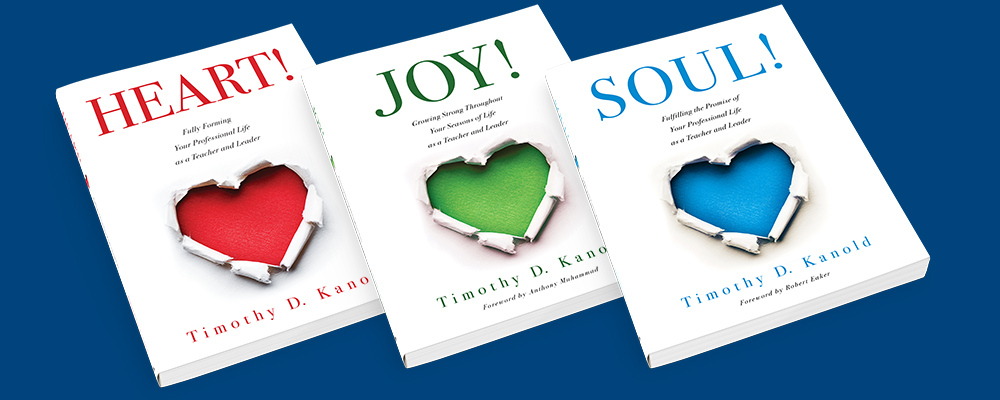
Hope starts with you 🌄
You cannot give what you do not have. Strengthen your own heart, soul, and joy with Timothy Kanold’s transformative book series—and continue serving as a powerful source of hope for your students and colleagues.
About the educator
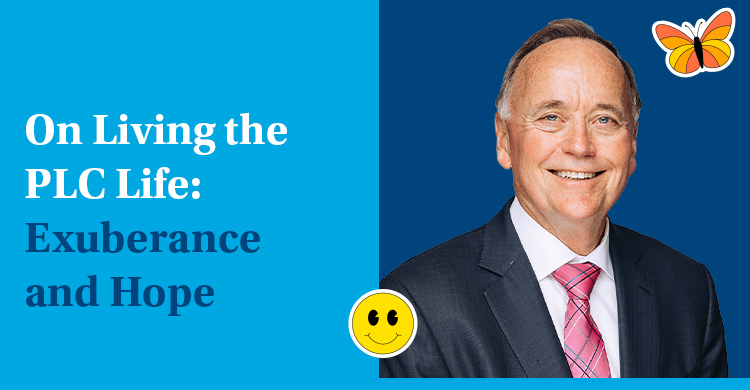
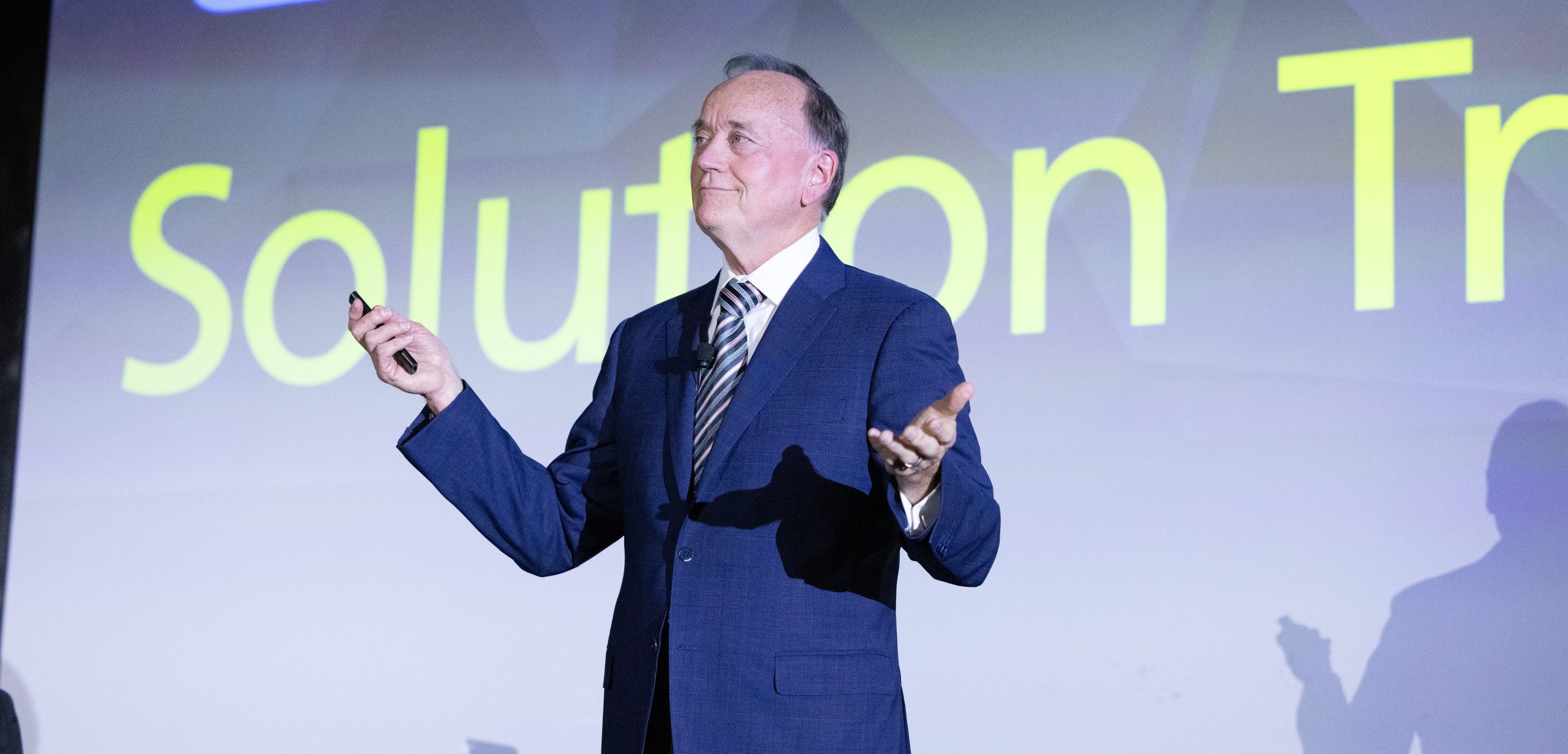
Timothy D. Kanold, PhD, an award-winning educator, author, and presenter, is former superintendent of Adlai E. Stevenson High School District 125, a Model PLC at Work® district in Lincolnshire, Illinois.
References
Trzeciak, S., & Mazzarelli, A. (2019). Compassionomics: The revolutionary scientific evidence that caring makes a difference. Studer Group.