
I recently heard an educator say, “If I hear self-care one more time, I’m going to punch someone in the face!” Whoa! How did we go from the revelation that educators, like airplane passengers, have to put on our own oxygen masks first to the mere mention of teacher wellness prompting immense frustration and eye rolling?
An effective framework for professional and personal wellness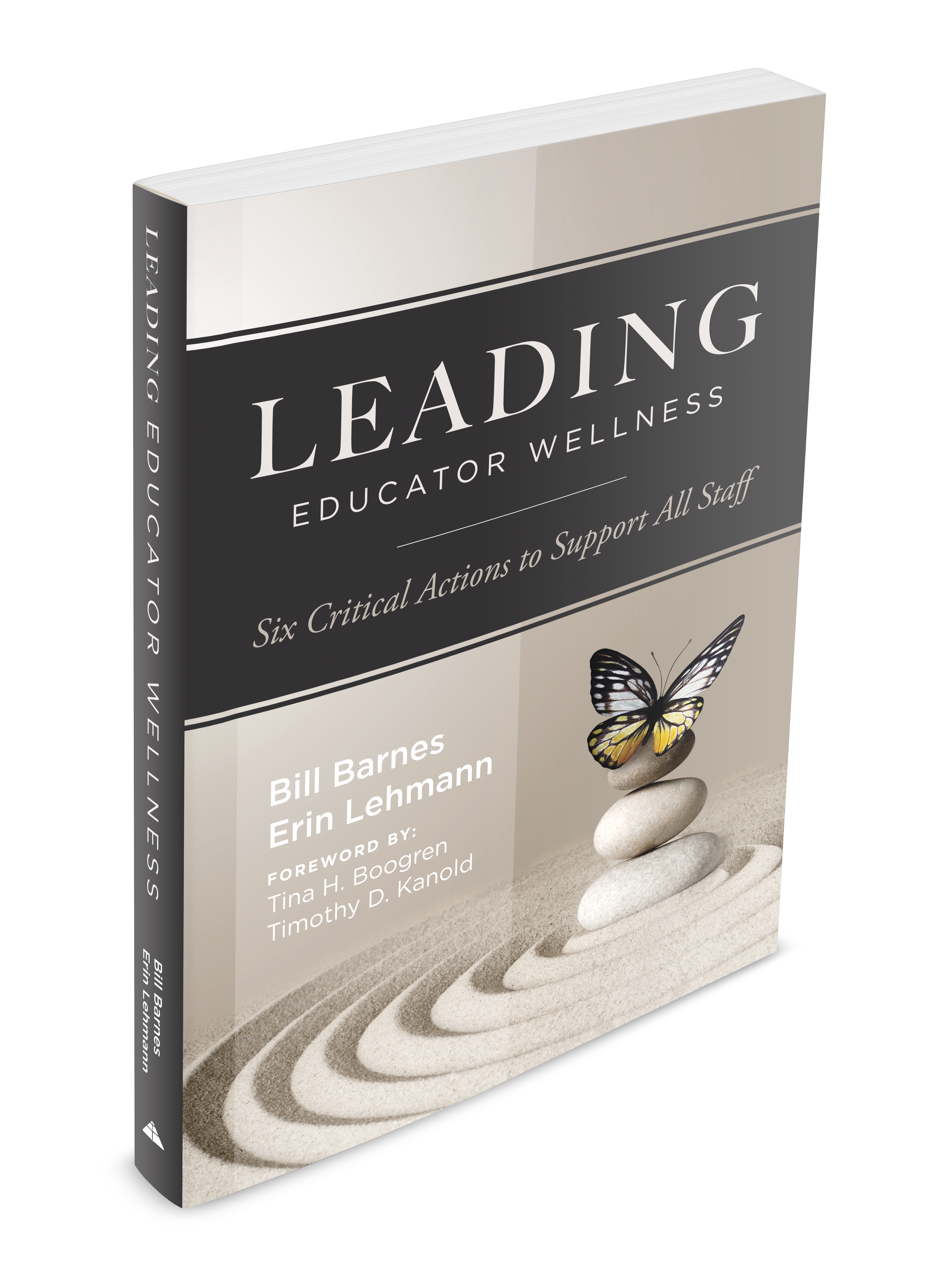
Like many education initiatives that have come before, educator wellness is not immune to distortion and manipulation of its original intent. In Educator Wellness, authors Timothy D. Kanold and Tina H. Boogren provide an effective framework for professional and personal wellness built on defining educator wellness as the “ongoing, active process aimed at achieving a positive state of good health and enhanced physical, mental, emotional, and social well-being.” Further, in Leading Educator Wellness, Bill Barnes and Erin Lehmann argue that purposeful self-care is the first step in leading a sustained culture of wellness at the school, office, and district level.
All that sounds essential for educator effectiveness—so, what’s the problem?
The best self-care starts with purpose, not avoidance
Self-care at its best allows educators to lead, teach, and serve effectively because the needs of others—students, staff, families, elected officials, and community partners—are not routinely coming first at the expense of essential rest, nutrition, and connection. When we think about teacher wellness, we invite educators to consider themselves among that long list of key stakeholders and equally worthy of care and consideration. For some educators, systemic wellness initiatives feel like a weight has been lifted and a lifeline has been offered to counter unhealthy, unsustainable habits.
But at its worst, self-care can be used as a cop-out—an excuse to renege on work commitments and a free pass to be inconsiderate of colleagues, all in the name of a skewed initiative that defines wellness as “me first” with no guardrails.

How to reclaim teacher wellness from misuse and myths
Imagine waking up to an early morning text from a staff member saying, “I’m not coming in today; I just need a mental health day.” If you are like most educators, you are more than willing to extend a helping hand because you recognize we all need grace extended to us at times. But when those early morning texts become a regular pattern of opting out of responsibilities, and now there is yet another mad scramble for coverage and a disruptive pivot in schedules, slight annoyance can turn into exasperation and resentment.
So how do we bring the self-care pendulum back to a place of personal and professional equilibrium?
Consider the following key messages for educators:
- You have the right to be away from work without guilt—you have the right to be sick, to focus on your health, and to take leave.
- Prioritizing self-care and managing work responsibilities can coexist. You can rest, heal, and relax while work continues to move forward.
- Education is not a solitary profession. There is an individual, collective, and systemic ripple effect of our actions—and the good news is we can use a positive ripple effect to our advantage!
There is one simple strategy that connects all the key messages and maximizes the benefits of self-care for you and your education community.
You give so much to your students—now give a little back to yourself. Dive into our free educator wellness webinar recordings for practical strategies, reflective practices, and supportive conversations designed to help you thrive.
Setting up a reliable backup before you take leave
Identify someone who can answer questions when you are away and move time-sensitive work forward—this could be one person or several. This person or people will be your point of contact (POC). Meet with your POC in advance to prepare them for the type of support you need and the type of questions they may need to respond to in your absence. Put their name(s) on your out-of-office message and give a heads-up to anyone who needs to know who your backup is when you are absent.
Designating a POC in advance means you have a backup for planned and unplanned absences. For example, a tenth-grade English teacher may designate a colleague as his POC to check in with his substitute teacher, cover hall duty, and provide coverage for an after-school club. A central office leader may designate one POC for questions received via email and phone, and another POC for unannounced visitors and specific projects.
I initiated the point-of-contact strategy for executive leaders in my school system several years ago, and it has been a game-changer for two reasons: (1) educators need a break, and (2) important work needs to continue even when people are on leave.
Are there still educators who struggle to fully unplug? Yes. But there are also leaders who return to work refreshed and ready to tackle challenges with renewed creativity and energy—because they took a healthy pause.

Our best outcomes begin with our own well-being
Purposeful self-care is the foundational wellness step—not only for individual educators but for teams, schools, offices, and whole school systems as well. Whether you are working today or taking a healthy pause, know this: You matter. Our students matter. And our collective work matters.
Individual self-care is not competing against our essential work of supporting students and improving their outcomes; rather, it is in service of that goal. In fact, it is the only viable chance we have at finally achieving the goals we want for ourselves and our students. Be well!
Guest author Karalee Turner-Little is a contributor to Leading Educator Wellness by Bill Barnes and Erin Lehmann. Continue exploring the thinking behind the book with free articles from additional contributors—like these articles from Bill Barnes (author), Timothy D. Kanold (foreword), and Tina H. Boogren (foreword).
About the author
Karalee Turner-Little, PhD, is deputy superintendent of the Howard County Public School System in Maryland. As a North Carolina Teaching Fellow, Dr. Turner-Little began her teaching career following in the footsteps of her educator parents and was an early achiever of National Board Certification. Her 30+ year career trajectory has included teaching middle school, which she describes as “our last best chance to reach our students;” providing professional learning experiences that motivate school-based and central office leaders to strengthen their growth mindsets; staying home with her two children, who have been her greatest teachers; and supporting four superintendents. She values health and well-being, bringing out the best in others, removing barriers, humor, and do-overs.